Trusted, supplier‑specific PCF data at scale – powered by Catena‑X
Catena‑X enables trusted, supplier‑specific PCF data at scale – from calculation to verification

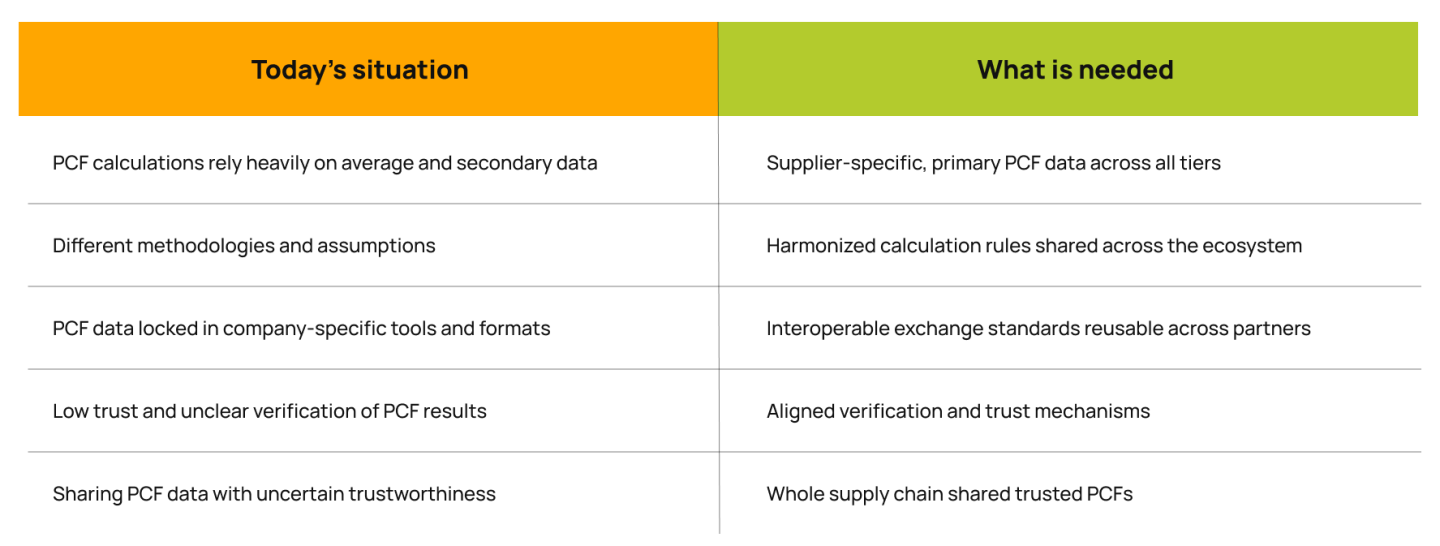
Why trusted PCF data matters – and where today’s approaches fall short
Core Challenge
- Supply‑chain emissions dominate automotive footprints, especially with electrification
- Companies rely heavily on average and secondary data, limiting accuracy and actionability
- PCF methodologies and formats differ across companies and tools, reducing comparability
- Supplier‑specific primary data is hard to collect and reuse across tiers
- Lack of trustworthy PCF data from suppliers as verification is time and cost intensive
What is driving urgency now
- Regulatory requirements (e.g. EU Battery Regulation, CBAM) require auditable PCF data
- Climate commitments (Paris Agreement, SBTi) extend deep into multi‑tier supply chains
- Procurement and reporting processes increasingly depend on reliable, comparable PCFs
- OEMs and suppliers need scalable solutions, not bilateral, tool‑specific integrations
Regulatory requirements, decarbonization targets, and supply‑chain collaboration are accelerating the need for this shift.
The Catena‑X PCF use case is developed collaboratively by the automotive industry.
OEMs, suppliers across all tiers, solution providers, and verification experts jointly define and maintain the PCF methodology, exchange standards, and verification framework within Catena‑X expert groups.
This collaborative governance ensures that PCF standards are practical, interoperable, and aligned with real supply‑chain implementation needs — while remaining open to new participants and continuous improvement.





























Status as of March 2026. Recent changes in Expert Group participation and companies with logo usage restrictions may not yet be reflected.
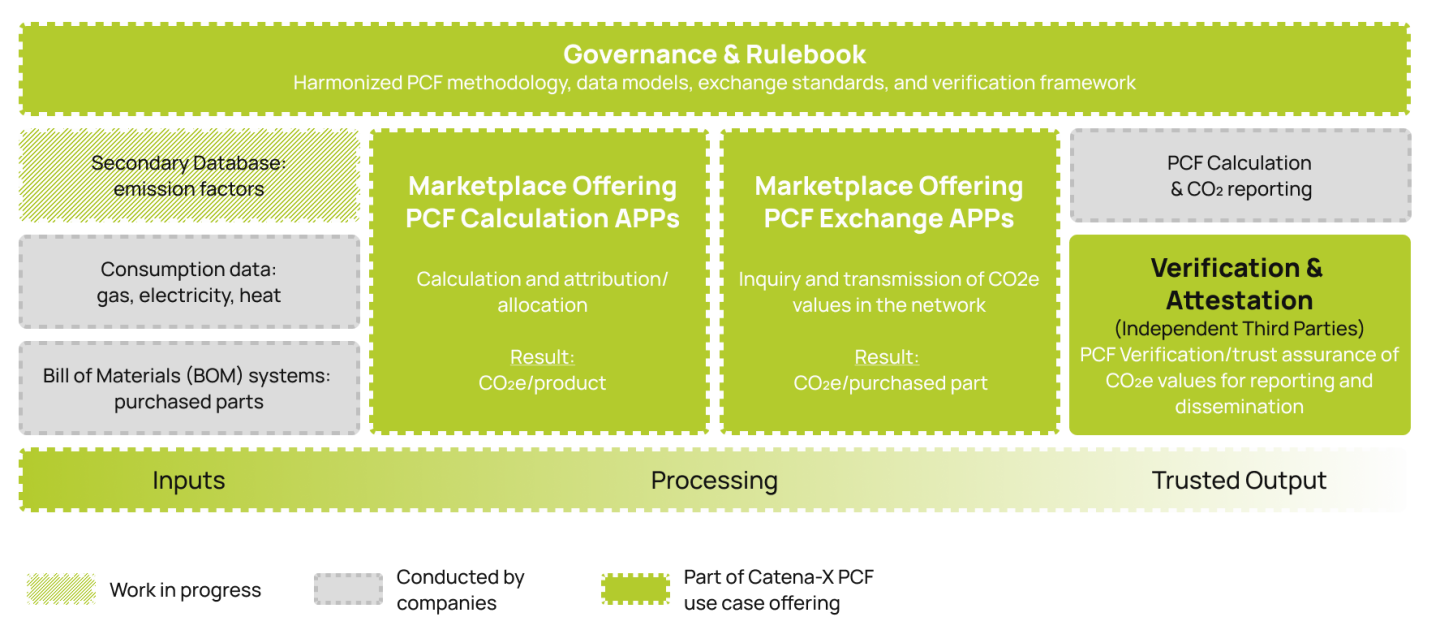
How Catena-X enables this and fills the gaps to calculate and exchange trustworthy PCF values
The Product Carbon Footprint use case in Catena-X establishes a shared and interoperable approach for generating and exchanging PCF values along the entire automotive value chain. Instead of isolated calculations and incompatible formats, Catena-X defines a common rule set, exchange standard, and technical framework so that PCF data can be trusted, compared and reused across partners.
Harmonized product-level PCF calculation based on the Catena-X PCF-Rulebook to ensure comparable and reusable results

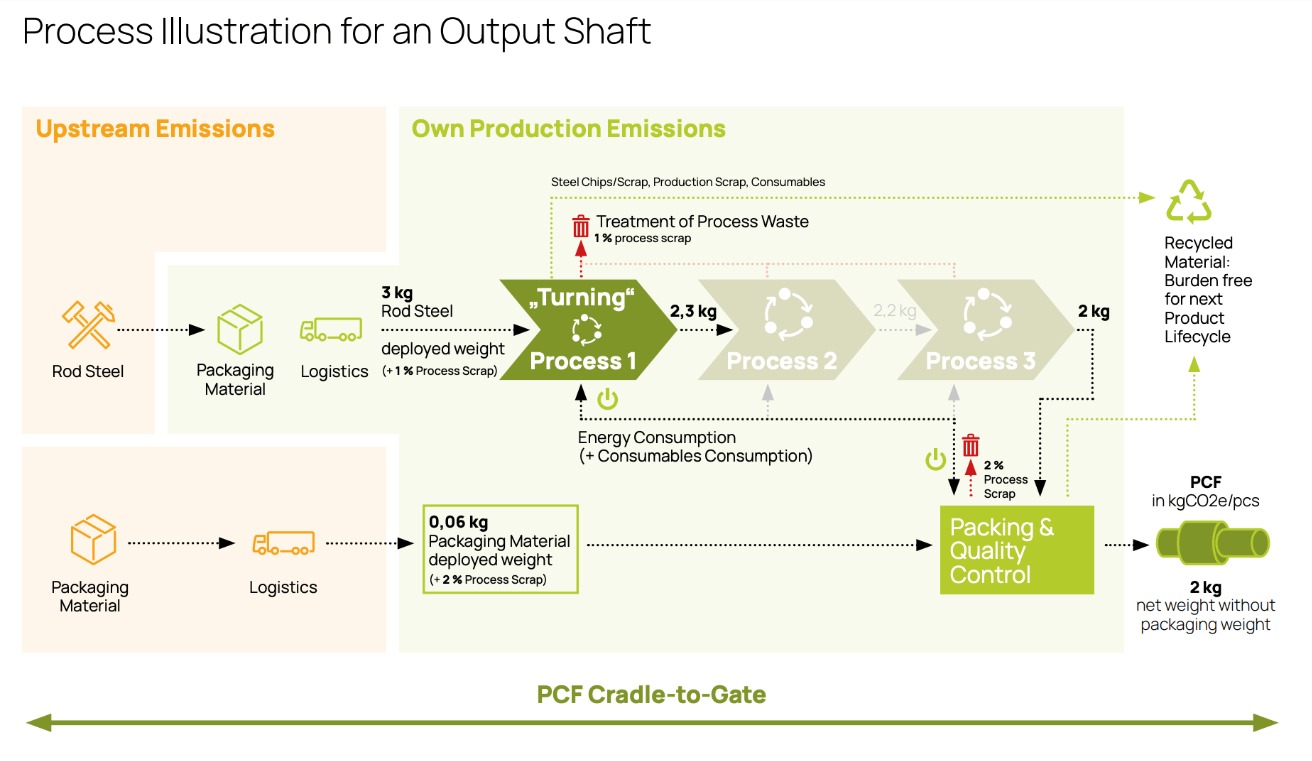
The following illustration from the PCF Guidance Document shows the step-by-step calculation of a PCF using an output shaft as an example, highlighting key process steps, data inputs, and calculation logic required for a comprehensive assessment.
Further Guidance Documents for PCF
Certified Catena-X Solutions for PCF Calculation
Discover the ready-to-use PCF calculation apps on the Cofinity-X Marketplace, built on the foundation of the Catena-X Association Rulebook. These apps provide an easy and reliable way to calculate product carbon footprints, fully aligned with the latest standards and methodologies defined by Catena-X. For additaional information check out the PCF Calculation Apps Pitch Session where the different apps are presented with their features and capabilities.
What is shared in Catena‑X is a structured PCF data set — not just one number
Product‑level PCF value
- Transparent distinction between primary and secondary data
- Defined system boundaries and lifecycle scope
- Allocation and methodological references
- Data quality and plausibility indicators
This allows PCF data to be reused, aggregated, and improved across tiers over time.
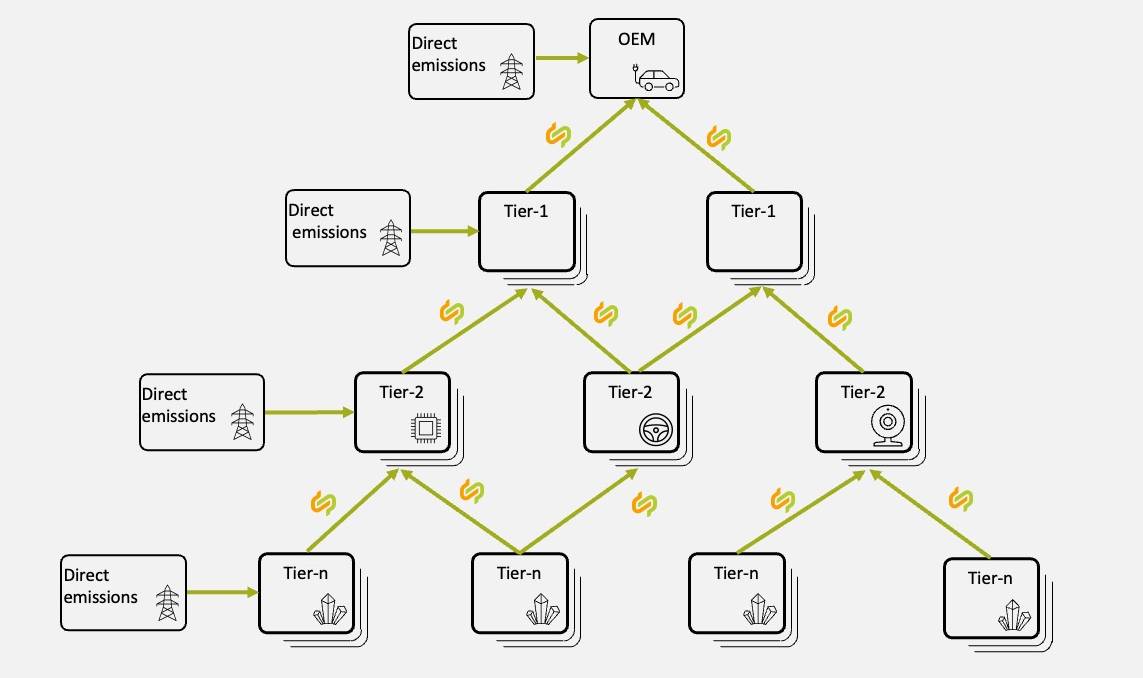
A common exchange standard for interoperable PCF data
Once PCF data is calculated, it needs to be exchanged digitally and consistently across company boundaries. Catena‑X defines a common PCF exchange standard to ensure that all partners interpret and reuse PCF data in the same way.
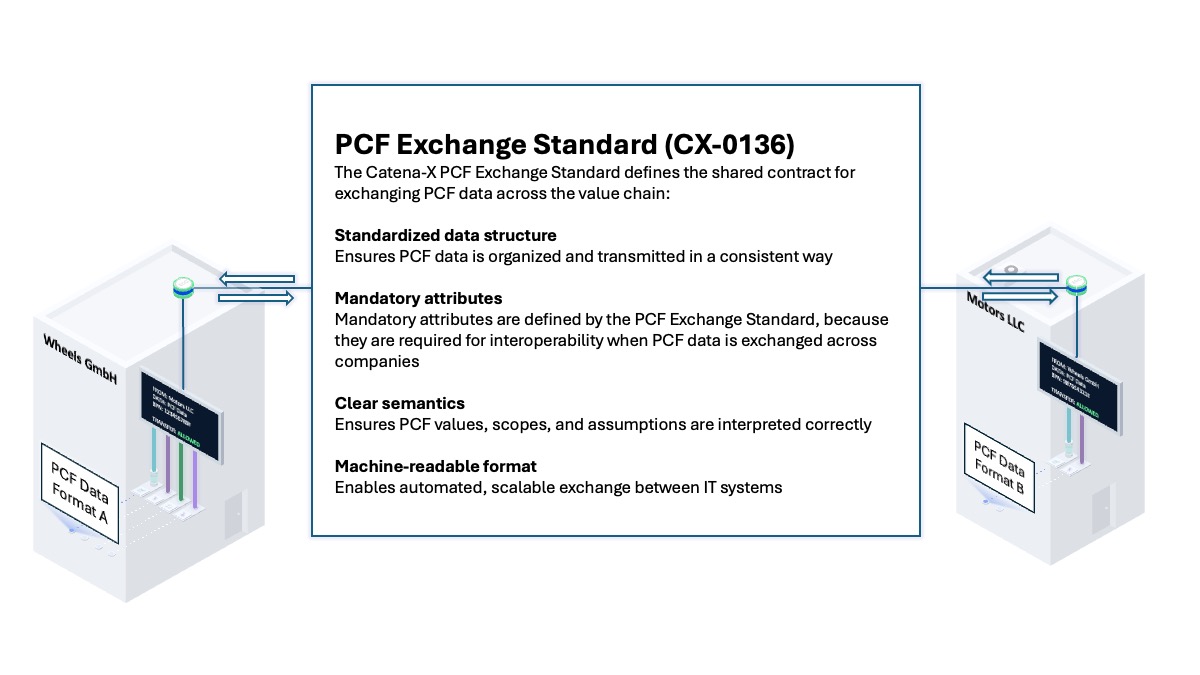
CX-0136 Standard CX PCF Data Model
The exchange standard ensures that PCF data keeps its meaning — regardless of the systems used. Interoperability is ensured with the usage of the PCF data model that includes aspects on the following information:
- Product‑level PCF data set
- Primary Data Share
- System boundaries & lifecycle scope
- Methodology & allocation references
- Data quality indicators
To exchange PCF data within the Catena‑X ecosystem, companies connect to the Catena‑X data space.
Catena‑X defines the standards and governance for PCF exchange, while the operational data exchange is hosted by Cofinity‑X as the data space operator. Depending on their technical setup and governance needs, companies can choose different operating models for PCF exchange.
All of the following options require onboarding into the Catena-X data space. You can start your data space onboarding journey here followed by one of the options for implementing PCF Data Exchange.
PCF Verification and PCF Programm Certification Framework
To ensure verification and trust for Product Carbon Footprint (PCF) data, Together for Sustainability (TfS) and Catena-Xhave jointly developed a comprehensive verification framework.
Catena-X Qualified Attestation Provider
The Catena-X Attestation Provider Qualification defines the rules and structure for becoming a trusted verifier of PCF data or certifier of PCF Programs, including:
- Qualification process – Step-by-step requirements for onboarding as an attestation provider
- Mandatory documentation – Proof of expertise, certifications, and compliance with assurance standards
- Assessment criteria – Evaluation of technical, procedural, and organizational capabilities
- Approval and registration – Formal recognition and listing in the Catena-X attestation provider registry
- Ongoing compliance – Regular audits and performance checks to maintain qualification
Current attestation providers – Qualified Certifier and Verifier authorized to issue PCF attestations within the Catena-X ecosystem
Become an Attestation Providers List of Attestation Providers
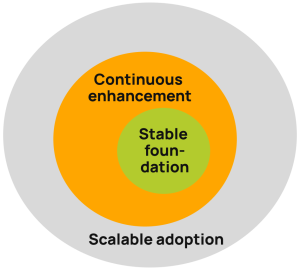
Catena‑X closes the critical gaps for trustworthy Product Carbon Footprints
A harmonized framework to calculate, exchange, and verify PCF — scalable for companies of all sizes.